

LifeHack is a film that seems to actually understands how people exist online now, how friendships form there, how chaos spreads there, and how quickly things can spiral once everyone starts pretending they know what they’re doing.
Plot
Kyle and his friends hack for fun, pranking online scammers. Seeking a bigger thrill, they target billionaire Don Heard through his daughter Lindsey's social media, stealing his cryptocurrency.
Good Points
Online friendships feel believable
Dialogue sounds realistic instead of overly scripted
Strong group chemistry throughout
Fast pacing keeps the tension constantly moving
Understands internet culture
Captures online panic and group-chat energy perfectly
Keeps suspense high despite mostly taking place on screens
Soundtrack keeps up the energy
Bad Points
Screenlife format feels visually restrictive at times
Some of the chaos occasionally borders on overwhelming
A few emotional moments could’ve hit harder visually
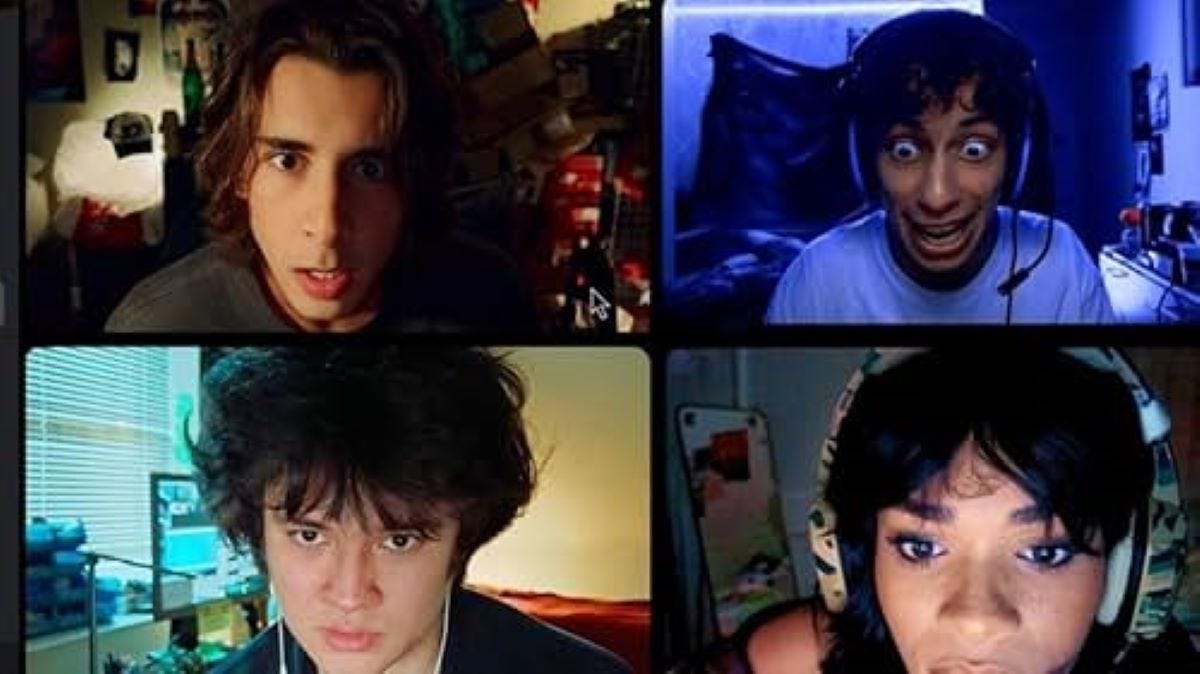
My Thoughts on LifeHack
This is one of the few internet movies that actually sounds real
Thankfully, in LifeHack, nobody talks like a 45-year-old executive guessing how teenagers communicate, because here conversations overlap, jokes die halfway through, people get distracted mid-sentence because another notification popped up, and half the group sounds like they’re operating on zero sleep and pure impulse, which feels accurate enough, doesn’t it?
The film also understands that online friendships can be incredibly close while also being slightly chaotic at all times, where everyone has that one group chat where somebody suggests a catastrophic idea and the rest somehow convince themselves it might actually work, and LifeHack captures that energy perfectly.
The group dynamic carries the film
Without the chemistry between the cast, this probably collapses instantly.
We spend most of the runtime staring at screens, video calls, messages, livestreams, and desktop windows, so if the characters didn’t feel believable together, the whole thing would become exhausting very quickly, but thankfully, the cast really sells the feeling that these people have known each other forever - they annoy each other naturally, they joke naturally, they panic naturally, and importantly, they make terrible decisions with the exact level of confidence real people do online.
The film actually understands what the internet looks like
Thank God this movie doesn’t treat hacking like glowing green code floating across a black screen while dubstep explodes in the background, as everything here feels ugly, cluttered, and stressful in the most believable way possible.
Twenty tabs open at once, terrible usernames, buffering, webcam lighting that makes everyone look vaguely haunted, and group calls turning into complete mayhem because nobody knows who should actually be in charge, with something constantly happening onscreen too, so the pacing is pretty good as well, and never reverts to just visual noise.
Everything is organised enough that you always understand the emotional momentum of a scene, which is probably the main reason the pacing works so well.
The screenlife format still has limitations
As much as I enjoyed it, there are still moments where the format holds the film back slightly, where some scenes clearly want to feel bigger and more cinematic, but there’s only so much visual energy you can get from watching small webcam boxes and desktop windows for two hours, and a couple of emotional moments lose impact simply because the film can’t physically break outside the screen format.
At the same time, the restriction also adds tension elsewhere, because when you see fragments of situations, hear panic through headsets,and watch people scramble between tabs, that does make everything seem worse and creates its own kind of anxiety, so the group-chat panic might be the most realistic part of the entire movie - nobody knows what’s happening, everybody suddenly thinks they’re an expert, and one person disappears at the worst possible moment.
Perfect online disaster management.
It’s not preachy about technology
The film also never turns into one of those exhausting “phones are destroying society” lectures, as it understands why these online spaces matter to people in the first place, even if they happen through screens, and it’s all done with a sincerity that stops the film from becoming just empty noise, so underneath all the hacking and mayhem, there’s still a story about people trying to matter to each other, and that emotional layer helps more than you might think.
I enjoyed the music as well, especially once everything starts spiralling harder, so it ends up working really well alongside the editing, and there were multiple stretches where I realised I’d been completely locked in for twenty straight minutes without even noticing.
And that’s always a good thing.
Final Verdict
I enjoyed LifeHack, even though I went in with low expectations, and found it fairly authentic about how people actually exist online, where the film understands internet culture without desperately trying to sound current every five minutes.
Trailer
Directed by - Ronan Corrigan
Written by - Ronan Corrigan and Hope Elliott Kemp
Cast includes - Georgie Farmer, Yasmin Finney, Roman Hayeck-Green, James Scholz with Jessica Reynolds, and Charlie Creed-Miles.
Cinematography by - Ciaron Craig
Edited by - Ronan Corrigan and Aleksandr Kletsov
Music by - Two Blinks, I Love You
Running time - 97 minutes
More Movie Posts


I like the way this review notices that LifeHack works because it does not treat the internet as a gimmick. The screenlife format is not just a visual trick here; it becomes the film’s moral environment, cluttered, fast, anxious, intimate, and dangerously frictionless. What sounds especially interesting is that the film understands online friendship without either romanticizing or condemning it. The group chat becomes a strange little chamber of modern character: everyone is close, everyone is distracted, everyone is performing confidence, and suddenly the joke has consequences. That may be the real horror of digital life, not that people are disconnected, but that they are connected so quickly that responsibility arrives after the damage has already begun.