

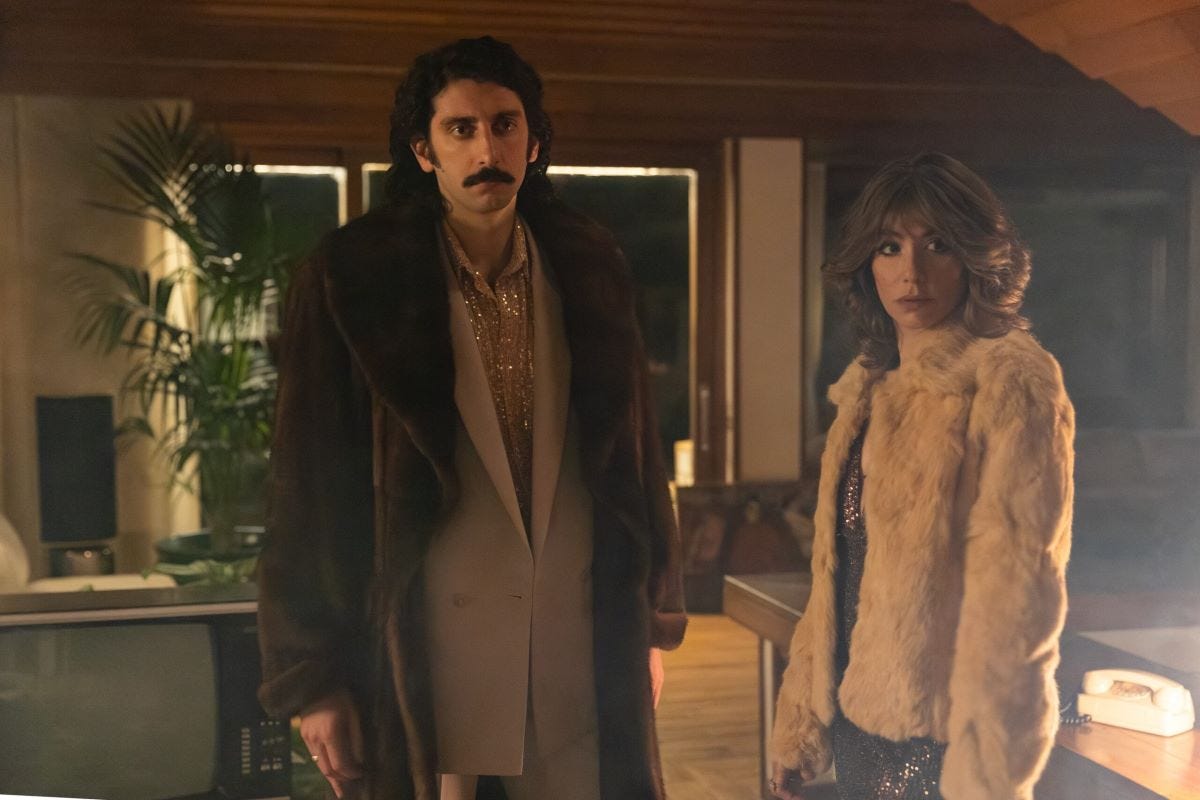
Why does Italy in the 1970s keep pulling filmmakers back in? The Big Fake seems to ask that question quietly, but without promising answers.
The Good
1970s Italy is pretty atmospheric
Pietro Castellitto
Forgery as practical, not romantic
Avoided turning real political tragedy into spectacle
Observational tone lets the moral rot speak for itself
The Bad
Some social leaps feel too easy
Production design occasionally flexes a little too hard
Secret services hover in vague, but quite convenient ways
Final stretch turns more conventional than it needs to
Emotional distance feels more cold rather than purposeful
It feels less about the era than the kind of person it creates
Antonio Chichiarelli, here called Toni, starts as a painter sketching tourists for loose change, and he is someone who has talent, confidence, and a worrying lack of caution.
Pietro Castellitto plays him with this kind of loose arrogance that never begs you for approval, where he is charming in flashes, irritating in others, and also utterly careless at times.
He doesn’t underestimate danger - he just doesn’t think it applies to him.
The Big Fake doesn’t romanticize art - painting isn’t sacred, ad forgery isn’t a moral fall - it’s just useful, because it brings money, access, and proximity to power, and Toni wants all of it.
His ambition stays consistent throughout, which makes everything that follows feel depressingly logical.
Forgery isn’t corruption here, it’s opportunity
The clothes, cars, clubs, and music of Rome are all carefully assembled, but thankfully not worshipped, where the city feels busy, but the production design sometimes shows its budget a little too proudly.
There are moments where I didnoticed the recreation more than the drama, and while the texture mostly works, instability hangs in the air.
Toni’s social circle also expands quickly, sometimes too quickly, but the film leans into that improbability instead of smoothing it over, as artists bleed into criminals, and criminals into politicians.
Donata, played by Giulia Michelini, introduces him to higher-end forgery and clients who prefer silence, and their relationship is transactional, efficient, and emotionally thin - affection exists, but it’s always secondary to usefulness you feel.
Parallel stories widen the scope of it all though - one childhood friend becomes a priest, slowly hollowed out by doubt, while another joins the Red Brigades, where his radicalization handled bluntly but purposefully.
These threads connect Toni to the political violence of the era without ever turning him into its symbol.
History happens around him, not because of him
The Aldo Moro kidnapping enters sideways, and Toni’s alleged involvement remains ambiguous, which I liked, as the film resists the urge to solve history.
By the final stretch, the crimes get bigger, the rhythm more familiar, and the film starts resembling a crime saga when it was more interesting as a portrait of ambition drifting through chaos.
A man shaped by opportunity, not ideology
Final Verdict
I found The Big Fake quietly absorbing, restrained, and occasionally distant, but thoughtful enough to not regret watching it.
More Reviews


