

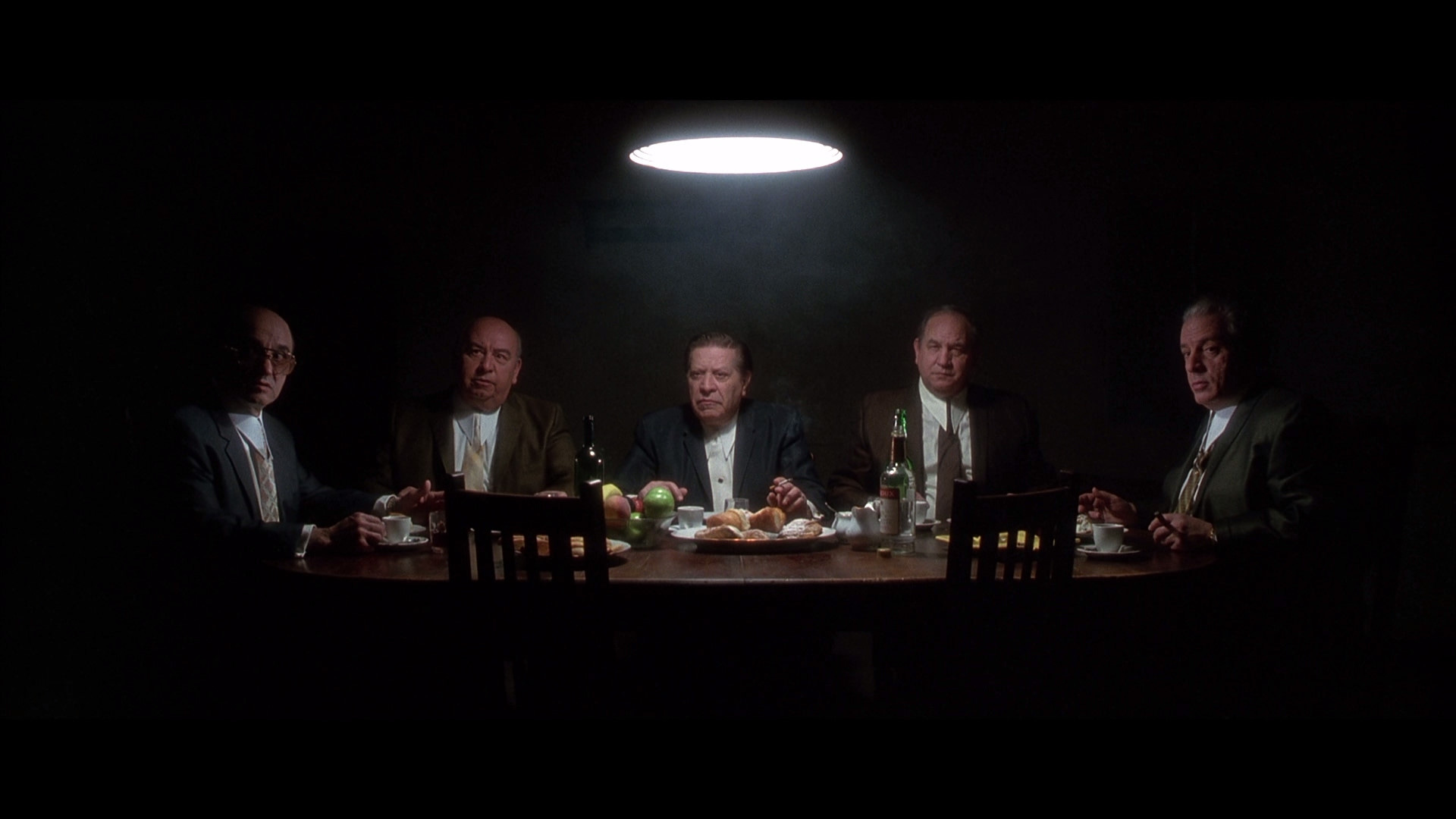
Violence, money, and people convinced they’re the smartest person in the room - Casino lives squarely in that territory.
Good Points
Strong performances from the three leads
Detailed look at how the casino and mob systems operate
Sharp contrasts on show
Stylish direction with memorable tracking shots
Bad Points
Occasionally feels indulgent
Narration sometimes over-explains the obvious
Scorsese treats the story like a machine.
One thing I’ve always liked about Martin Scorsese when he’s working in crime territory is how methodical he can be, as he never seems to romanticise the mob world, he just seems to break it down piece by piece, and Casino works exactly like that - like someone explaining how a very complicated machine operates - who controls the gears, how the money flows, and what happens when the parts stop cooperating.
And eventually, of course, the machine overheats.
That analytical approach turns the film into something slightly different from a typical crime story, because it doesn’t ask whether these characters will succeed - the film almost assumes they won’t - the real question becomes how long the system can function before it collapses under its own weight.
Scorsese has made plenty of films outside the crime genre, but when he’s dealing with ambitious, morally flexible characters chasing money and power, he’s at his very best - Casino is long, and excessive, but the the world it’s portraying is also equally excessive.
And of course, inevitably, conversations about Casino always drift toward comparisons with Goodfellas, and personally, I’ve never found that comparison particularly useful - yes, the films share similar elements, but they really do feel quite different in tone.
And as much as I do love Goodfellas, I love Casino more, and I won’t go into why here, as this is about Casino, but maybe another day.
Robert De Niro plays a mobster like an accountant.
Who doesn’’t like Robert De Niro?
In Casino, he puts in his usual controlled performance, where his character feels like a meticulous manager who happens to work for very dangerous people, and someone who is obsessed with systems.
Watching him manage the casino is almost like watching someone carefully maintain an expensive watch, because every small part has to function correctly or the entire structure starts to wobble.
I could watch him in these kind of films all day, every day - and thankfully, he’s made a few!
Across from him is Joe Pesci, playing the opposite philosophy entirely, as his character doesn’t care about systems or patience - he’s basically a walking escalation, where every disagreement feels like it could turn into violence within seconds.
And that contrast between De Niro’s careful control and Pesci’s constant volatility creates most of the film’s tension, where their scenes together feel like arguments between logic and impulse - and the uncomfortable truth is that impulse eventually wins.
The narration is excellent
Casino uses a ton of narration, and while I tend to prefer when films trust the audience to piece things together visually rather than explaining everything, but here though the narration ended up working for me, as it reinforces the idea that everyone in this world believes they understand the system perfectly.
They speak with total confidence about how money moves, how casinos operate, and how the mob keeps everything under control, and that certainty becomes quietly amusing once things begin to fall apart.
But, I will say there are moments where the explanations go on a bit too long, where occasionally the film sounds like a lecture on casino management.
Sharon Stone disrupts the entire system.
Her performance here is deliberately messy, and one that constantly disrupts the carefully controlled world Ace is trying to build, and while I didn’t always like the character, but I don’t think we’re supposed to though.
There’s a particular scene involving her daughter thatis a bit uncomfortable to watch - not because the filmmaking is poor, but because the film refuses to soften the situation.
At that point any sympathy I had for the character started to fade, but again, that’s the point though.
The camera is constantly moving.
Visually, Scorsese keeps the film alive through constant motion, as we witness the camera gliding through hallways, across casino floors, and past rows of slot machines.
At times the whole movie feels choreographed - people, money, and movement arranged like a complicated routine, and there are also overhead shots that emphasize how structured the casino world appears from above - everything looks incredibly orderly and controlled.
Meanwhile, the people inside that structure are anything but orderly, a contradiction. that quietly suggests that the sense of control in this world is mostly an illusion.
The humour is dark and very dry.
Despite the violence and greed, the film occasionally slips into dark humour as well, where some lines are delivered with such blunt honesty that they become funny, where much of the humour comes from the characters’ confidence in their own logic.
They explain terrible behavior with the calm tone someone might use to describe office procedures, and that kind of casual immorality is fascinating to watch.
By the final stretch, the orderly world established at the beginning starts to unravel as you wuld expect, as everything becomes increasingly unstable - characters who once believed they understood the rules discover those rules were never permanentm and Scorsese handles that shift very well, as the collapse feels gradual but inevitable, like watching a carefully balanced structure slowly tilt until it finally gives way.
Final Verdict
Casino is confident, sharply performed, and fascinating to watch, where Scorsese builds a world of ego, greed, and control - and then calmly watches it destroy itself.
More Reviews


