

Faces of Death has always been more of a cultural object than a film, where it lives in hearsay, not memory, and a thing people swear they saw, or knew someone who saw, or definitely weren’t allowed to watch when they were younger.
It wasn’t just a tape, it was a rumour with distribution.
This new version steps into that space knowing full well it can’t recreate that kind of shock, as nothing really can anymore, because we’ve seen too much, too easily, for too long.
So instead of trying to repeat the past, it updates the question entirely.
Plot
A woman, employed as a website content moderator, comes across a series of violent videos reproducing death scenes from a film.
Good Points
Smart modern update of the Faces of Death concept
Strong focus on attention culture and online violence
Dacre Montgomery’s performance
Content moderator storyline feels very relevant
Moments of genuine discomfort
Commits fully to its concept without nostalgia dependence
Bad Points
Occasionally too on-the-nose with its themes
Some narrative beats feel over-explained
Final act edges toward being a bit too tidy for its own ideas
Tone can feel repetitive in stretches
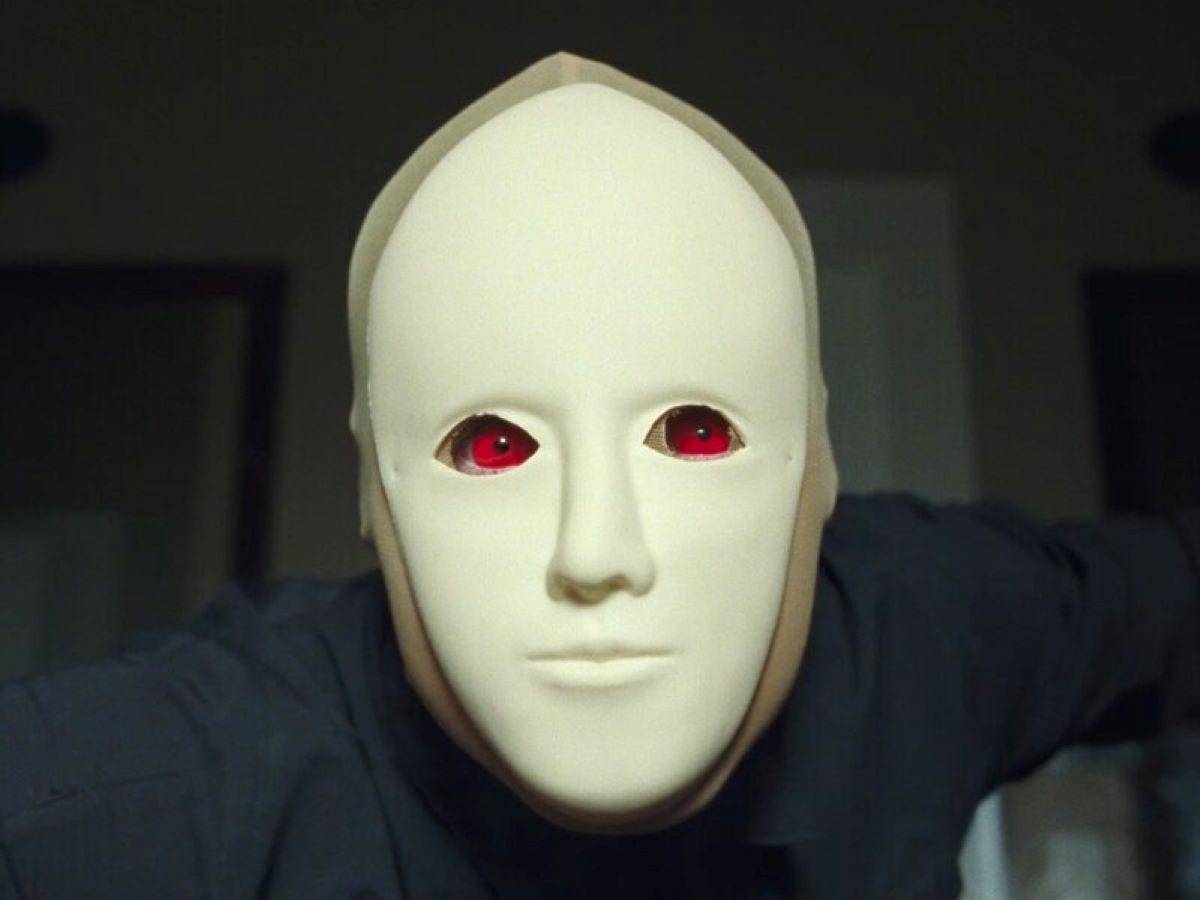
My Thoughts on Faces of Death (2026)
It’s not shock anymore - it’s just content
What this version understands immediately is that shock has changed shape - the killer here doesn’t feel like a myth or a shadowy figure - more someone who has fully absorbed internet logic and turned it into a workflow.
It’s structured, curated, and almost boring in how efficient it is, which is what makes it worse, because it doesn’t feel like a departure from reality, and it feels like an extension of it, just stripped of the usual moral buffering.
Margot’s job feels like quiet damage
Margot Romero, working as a content moderator, is placed right in the middle of that system, where her job is basically to watch the internet rot in real time and decide what version of it other people get to see.
And what stands out isn’t even the horror of what she’s watching - it’s how normal everything around her looks while she’s doing it, and it’s that contrast that does a lot of the work, because the film quietly suggests this is already how most of the internet is maintained - just with slightly more emotional distance on paper than in practice, where it refuses to treat the internet as neutral infrastructure - it’s not just where things happen, it shapes what happens.
Engagement becomes the only real metric that matters, and morality sits somewhere far down the list, if it appears at all, where the system doesn’t debate ethics, it routes around them.
Arthur understands attention better than anyone
Dacre Montgomery’s Arthur is where the concept sharpens into something even more uncomfortable - methodical, patient, structured and almost professional in how he approaches people - he doesn’t just kill, he produces.
That sounds exaggerated until the film shows how carefully he constructs each act around visibility, reaction, and distribution, and there’s a cold logic to him that lingers with you more than anything graphic he does.
The final collision feels inevitable, not surprising
When Margot and Arthur’s paths finally converge, it should have serious consequence - two people shaped by the same system, but responding to it in completely different ways.
By the time it becomes physical, it doesn’t change tone - it just confirms what’s already been building, and what stays after it ends isn’t actually any single moment of violence - it’s the repetition of a simple idea - attention is the real engine underneath everything, it’s just rarely acknowledged out loud.
And I appreciated that it doesn’t posture above it, it doesn’t pretend to be separate from the system it’s criticising, it just sits inside it and follows it to its logical endpoint.
Final Verdict
Uncomfortable, occasionally blunt, and while it doesn’t revive old shock - it shows how little shock is left.
Trailer
Directed by - Daniel Goldhaber
Written by - Isa Mazzei and Daniel Goldhaber
Cast - Barbie Ferreira, Dacre Montgomery, Josie Totah, Aaron Holliday, Jermaine Fowler and Charli XCX
Cinematography - Isaac Bauman
Running time - 98 minutes
More Movie Posts



Added to my watchlist