

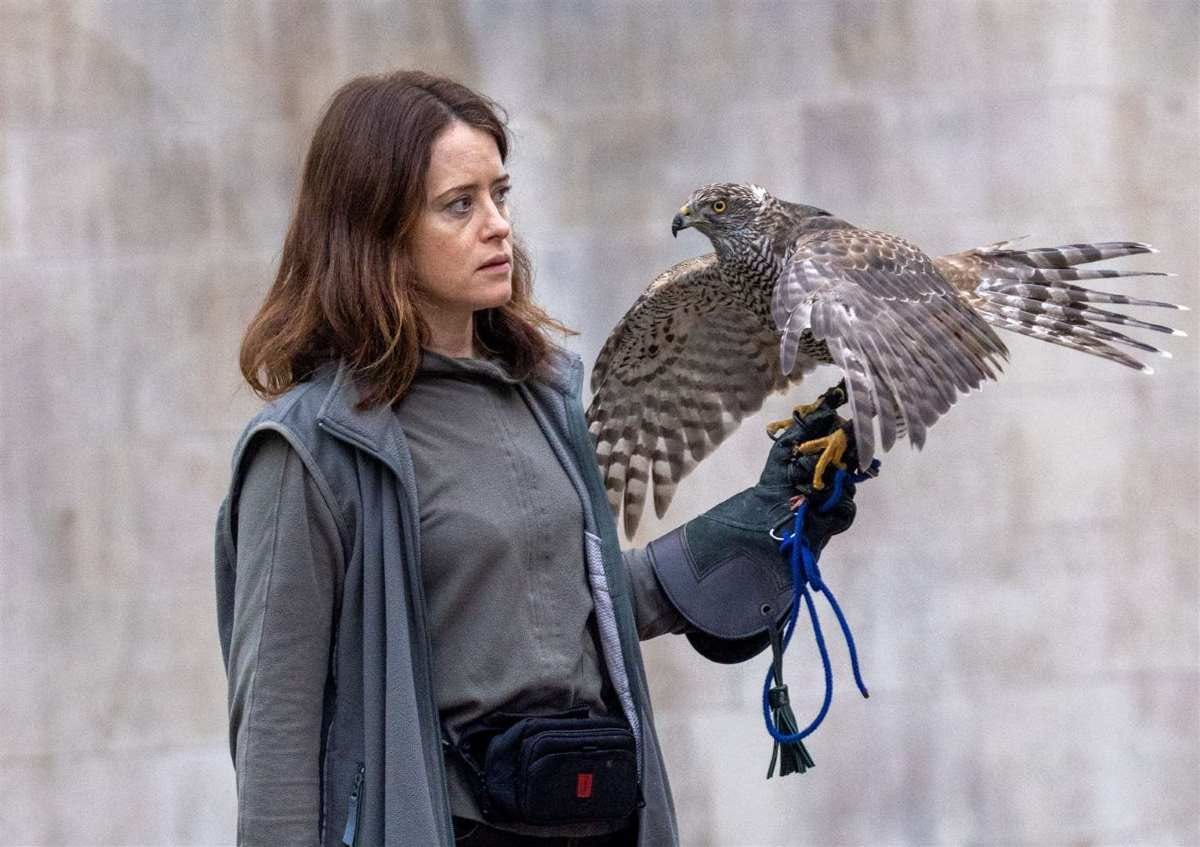
Why watch a film about a woman and a goshawk?
Well, this is why.
The Good
Claire Foy (Mostly)
The film potrays grief without spelling it out
Falconry sequences
The cinematography is striking
The restraint is strong, with no dramatic arcs, which I appreciated
The Bad
Emotional distance can feel cold at times
Pacing is sometimes a bit too slow, and sometimes frustrating
The tension is mostly internal, which made some of the film feel static.
The film leans heavily on repetition, and at times, it felt like I was watching the same sequence in slow motion
Grief here isn’t a process, it’s a habitat
Claire Foy carries Helen MacDonald with an austerity that borders on rigid, with a subtle control and tension simmering under the surface, as her academic life continues in the background, orderly and almost irrelevant, while Mabel, the goshawk, dominates her daily reality.
Falconry apparently is exhausting, isolating, and unpredictable, but Helen does it because she has nothing else that makes sense.
Flashbacks to her father provide some context without the melodrama, and his absence is practical as much as emotional.
That steadiness contrasts with the chaos of Helen’s current life, which is consumed by care, attention, and survival of a creature that literally could kill her.
The bird doesn’t comfort her
Supporting characters are present but peripheral.
Her mother, colleagues, and friends hover around without being central, which reinforces Helen’s isolation, and the film shows relationships as limited, awkward, and unresolvable, refusing any moral or emotional neatness.
Close-ups of the hawk’s feathers, the sharpness of its gaze, and muted Cambridge interiors help create the contrast and tension - nothing is decorative, as everything is functional, emphasizing the alienness of Helen’s domestic obsession.
The sequences are a bit repetitive, but only because falconry itself is repetitive, and the film leans into that monotony to let the weight of grief sink in.
Nothing is tidy, nothing is resolved
The film’s commitment to restraint sometimes becomes its challenge though.
Pacing is slow, emotional distance can feel cold, and Foy’s control occasionally flattens affect.
Still, it succeeds in showing grief as lived experience - awkward, consuming, inexplicable, and ongoing - and you may not leave with closure, but you leave with something more subtle, which is a sense of what it feels like to keep going when life is quietly unmoored.
Final Verdict
The precision, restraint, and unflinching portrayal of grief make it worth watching.
It demands patience, but the honesty that comes across will probably hit you in some ways, and probably not in a good way.
More Reviews


