

Passenger is road horror built on isolation and silence that starts off fairly gripping, before it spends the second half explaining itself out of the atmosphere it worked so hard to create.
Plot
A few weeks into their van life adventure, a young couple witnesses an accident that leaves the driver dead. Soon, they're being pursued by a demonic stalker who's impossible to outrun and follows them wherever they go.
Good Points
Strong sense of isolation in the opening stretch
Slow-burn tension that builds naturally
Decent performances from both leads
A couple of jump scares land effectively, even if they’re familiar
Bad Points
Second half loses momentum and focus
Removal of ambiguity drained much of the tension
Pacing becomes too uneven after the midpoint
Visual effects sometimes break immersion
Some predictable genre clichés appear
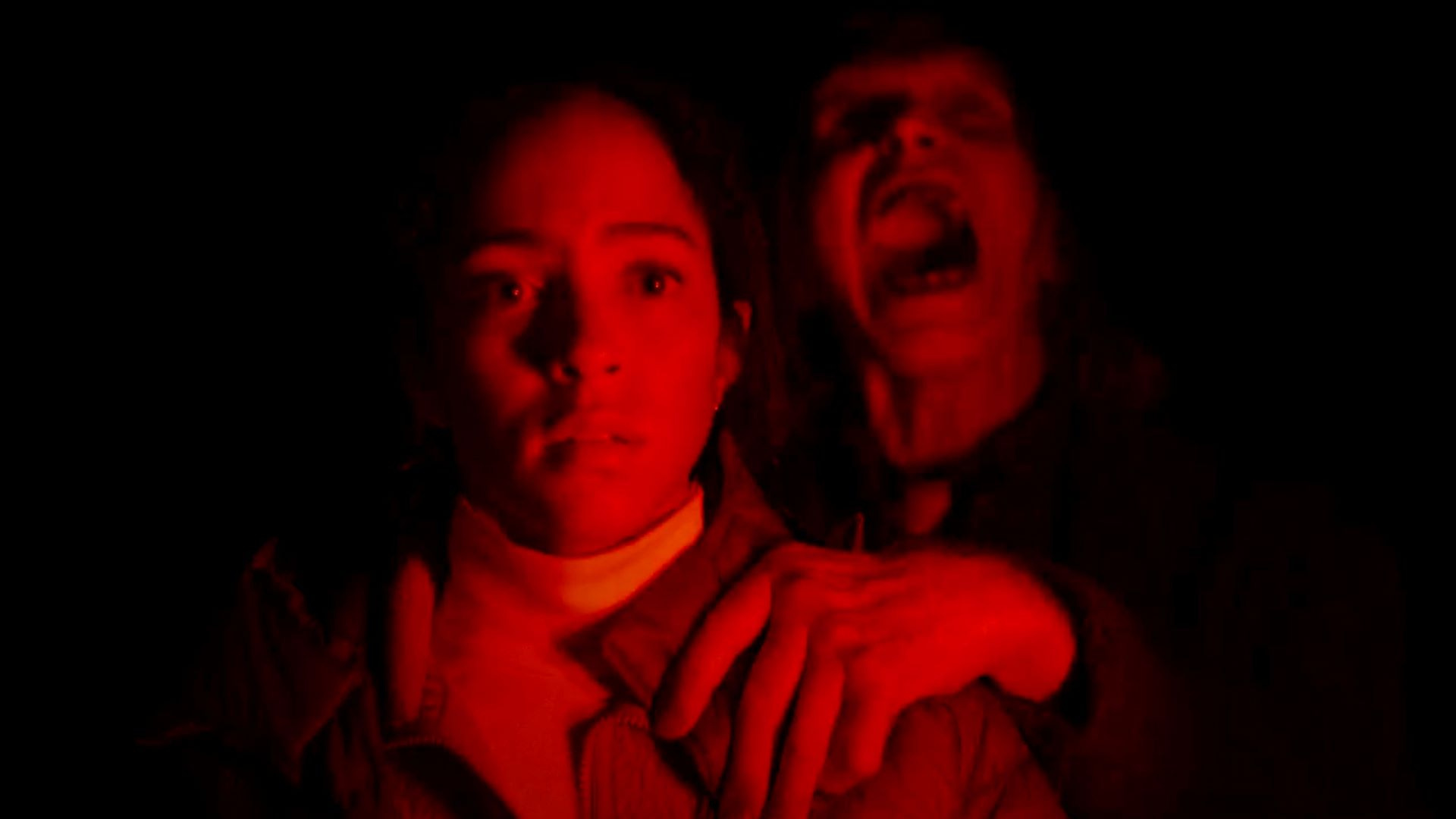
My Thoughts on Passenger
The opening understands exactly what road horror needs
The first half of Passenger is where the film feels most confident, and it’s mainly because it understands what road horror actually relies on when it works best, it doesn’t just depend on constant events or over-staged scares, the film builds all the tension it needs through space, silence, and the idea that something could go wrong at any moment without warning.
The film has a noticeable sense of restraint in the opening stretch, featuring long driving sequences which dominate early on, often stretched out with minimal dialogue and an uneasy quiet that slowly becomes more oppressive, - nothing feels rushed, and nothing is over-explained, allowing the atmosphere to build in a natural, confident, and patient way.
What worked well here is the film’s willingness to trust you as the viewer, as it doesn’t constantly interrupt itself to clarify what’s happening or explain where the story is heading, it lets uncertainty exist without immediately resolving it, and that ambiguity becomes the engine of the tension, because you’re never entirely sure what’s significant and what isn’t.
There’s also something refreshing about how much the film resists exposition early on, because so many modern horror films feel the need to constantly reinforce meaning or logic for the distracted viewer, but Passenger avoids that trap - well, at least at first…..
The shift into explanation weakens the atmosphere
The problem is what happens once the film starts moving away from that ambiguity, and when it begins to shift gears and lay things out more directly - more dialogue, more explanation, and more structured storytelling that starts filling in the gaps that were previously left open.
On paper, that should make the narrative easier to follow, and of course a film needs to move forward, but emotionally it just stifles the experience, because the tension in the first half is built almost entirely on not knowing, and once that uncertainty gets removed, the atmosphere changes in a way that feels more conventional, like the film lost confidence in what it was doing.
It all becomes more defined and procedural, and that feeling you had gradually uncovering something unnerving disappears, but that’s not to say the ideas themselves are weak, and the film still needs to progress in some direction as mentioned, but the issue is more about execution and timing.
By explaining too much, it ends up undercutting the very tension it worked so hard to establish in the opening act, and it also creates a noticeable tonal shift, as while the early sections are defined by atmosphere and suggestion, the later sections become more concerned with clarity and resolution.
That shift wouldn’t necessarily be a problem if it were handled gradually or carefully, but here it feels a bit too abrupt, and weakens the overall momentum.
The second half struggles to sustain tension
This becomes even more obvious in the second half, where pacing loosens and the sense of controlled escalation starts to fall away, so the film feels less precise here, and the structure becomes more uneven as it moves between exposition-heavy scenes and attempts at reintroducing tension.
Visually, we also get a slight decline in effectiveness, where the early reliance on darkness and suggestion gives way to more explicit reveals, and while that can sometimes work in horror, here it tends to reduce the impact - also, a few visual effects feel a bit too obvious.
Where the first half is almost entirely about mood, restraint, and implication, the second half becomes more focused on explanation and resolution, but once horror starts prioritising clarity over tension, it inevitably loses some of its edge - the fear is no longer something that builds naturally, it becomes something that is increasingly spelled out.
The film does have its moments though, and it features some half decent generic and cheap jump scares that work OK, and the performances remain steady throughout, with Jacob Scipio and Lou Llobell never slipping into exaggerated horror reactions, but it does feel like a big missed opportunity however, and I wish the film had trusted itself a bit more and kept up with the confidence it showed at the start.
Final verdict
Passenger is a frustratingly uneven film that begins with real promise, then steadily deflates it, and not one I would recommend you pay to watch, but it does have a few decent moments thrown in as well.
Trailer
Directed by - André Øvredal
Written by - Zachary Donohue and T.W. Burgess
Cast includes - Jacob Scipio, Lou Llobell, and Melissa Leo
Cinematography by - Federico Verardi
Edited by - Martin Bernfeld
Music by - Christopher Young
Running time - 94 minutes
Saccharine (2026) Review

The horror in Saccharine simply comes from how recognisable all of it feels, but unfortunately, the movie eventually loses control of its own ideas a bit.
LifeHack (2026) Review

LifeHack is a film that seems to actually understands how people exist online now, how friendships form there, how chaos spreads there, and how quickly things can spiral once everyone starts pretending they know what they’re doing.
Is God Is (2026) Review

What does a first film need to do to actually stay with someone, not just pass through as another “interesting debut” you forget about two days later?
Obsession (2026) Review

Obsession proves that even a simple horror idea can be very effective - “what if someone actually got the obsessive love they thought they wanted?” - and then drags that idea into increasingly uncomfortable territory, until the whole thing starts feeling like emotional suffocation.
The Ugly Stepsister Review (2025)

This is a body horror film that doesn’t care if you look away - disturbing, oddly beautiful, and emotionally exhausting that sticks with you, and by the end, you don’t feel clean watching it, you feel implicated.
That's really a shame that the second half loses the tension, the first half sounds like if it were sustained would've made for a unique experience! Love your writing style by the way, I also love to write about my thoughts on movies (mostly nostalgic.) Would love to subscribe and show my support if you wanna check my page out too :)