

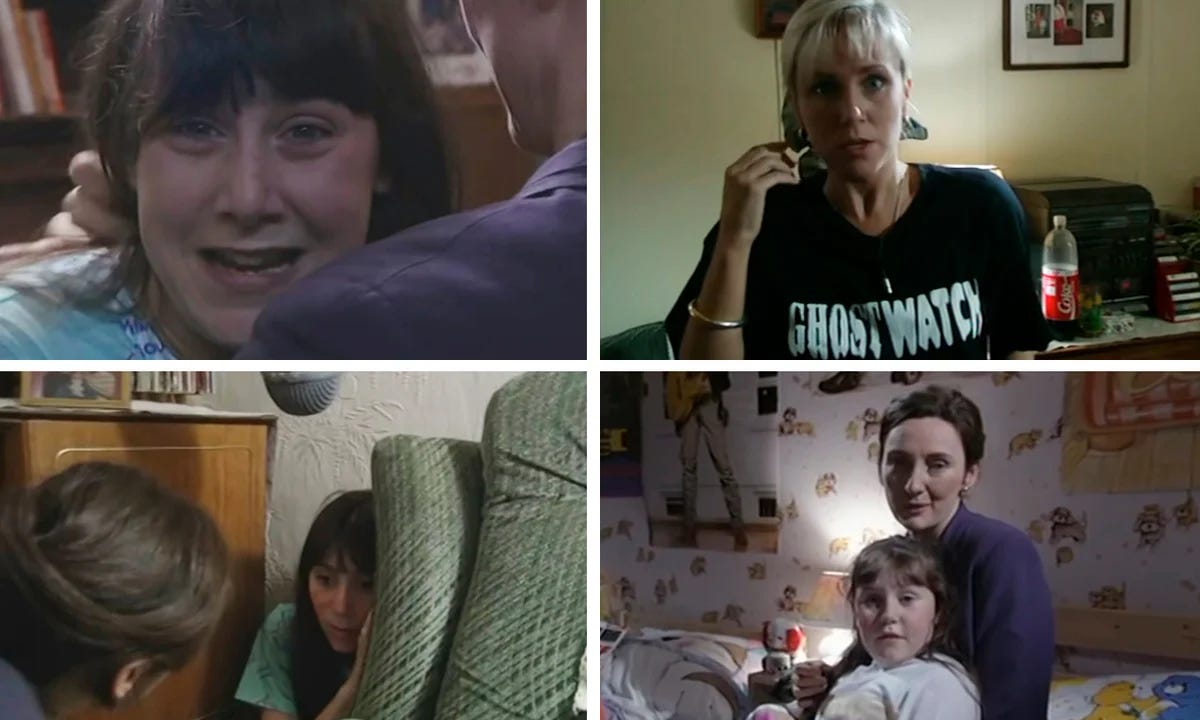
Who else remembers Ghostwatch?
On paper, it was basically a Halloween TV stunt from the early 90s by the BBC, featuring a fake live broadcast and a haunted council house.
They presented the whole thing like a normal piece of television, complete with familiar presenters and studio discussion, and because of that, people believed it.
Not everyone, obviously, but more than enough to raise a load of controversary.
Good Points
Clever use of real BBC presenters playing themselves
Gradual escalation
Brilliant use of background horror
The fake live-broadcast format is surprisingly convincing
Subtle, patient storytelling
Quietly influential on later horror formats
Bad Points
Feels dated now.
The pacing can feel slow at times
Using real presenters was a genius move.
This is the thing that sells the whole illusion.
Seeing people like Michael Parkinson, Sarah Greene, and Craig Charles acting like nothing unusual is happening helps create this strange layer of authenticity, where they were just being themselves.
Or at least pretending to.
The whole program feels like something you might casually watch after dinner - a slightly cheesy paranormal investigation, and the kind of thing you half-pay attention to .
And that normality is exactly why the creepiness sneaks up on you.
What I like about Ghostwatch is how patient it is.
For a long stretch, not much happens at all - people talk, they walk around the house. and they discuss noises in the walls and strange disturbances - so if you walked into the room halfway through, you might assume it was just another mildly spooky documentary.
But then you start noticing things - a figure that is barely visible, that once you spot it, the whole thing suddenly feels much more unsettling and that little bit more real.
Part of what made the broadcast so controversial though was just how convincing it was, because the BBC wasn’t exactly known for prank horror specials, and people trusted them, so when Parkinson sits in a studio discussing paranormal activity with a straight face, viewers are conditioned to assume it’s legitimate.
So when things start going wrong, people panicked - you’re watching a ghost story disguised as a news program.
And in 1992, that was apparently enough to make 30,000 people pick up the phone.
The final act is where it is at
The house investigation spirals, communication breaks down, and the tone shifts from mildly spooky to something much darker, and it starts feeling like something is genuinely malfunctioning, where the ending is abrupt and deliberately unsettling.
No tidy resolution, just a sense that the broadcast has gone very, very wrong - a bold way to finish.
Watching it today, some elements do feel dated of course. and most modern horror audiences would no doubt scoff, and a few performances feel slightly theatrical, where you can also see the mechanics of the show more clearly if you know what’s coming.
But none of that ruins it for me, because the core idea is still clever, espcially for its time.
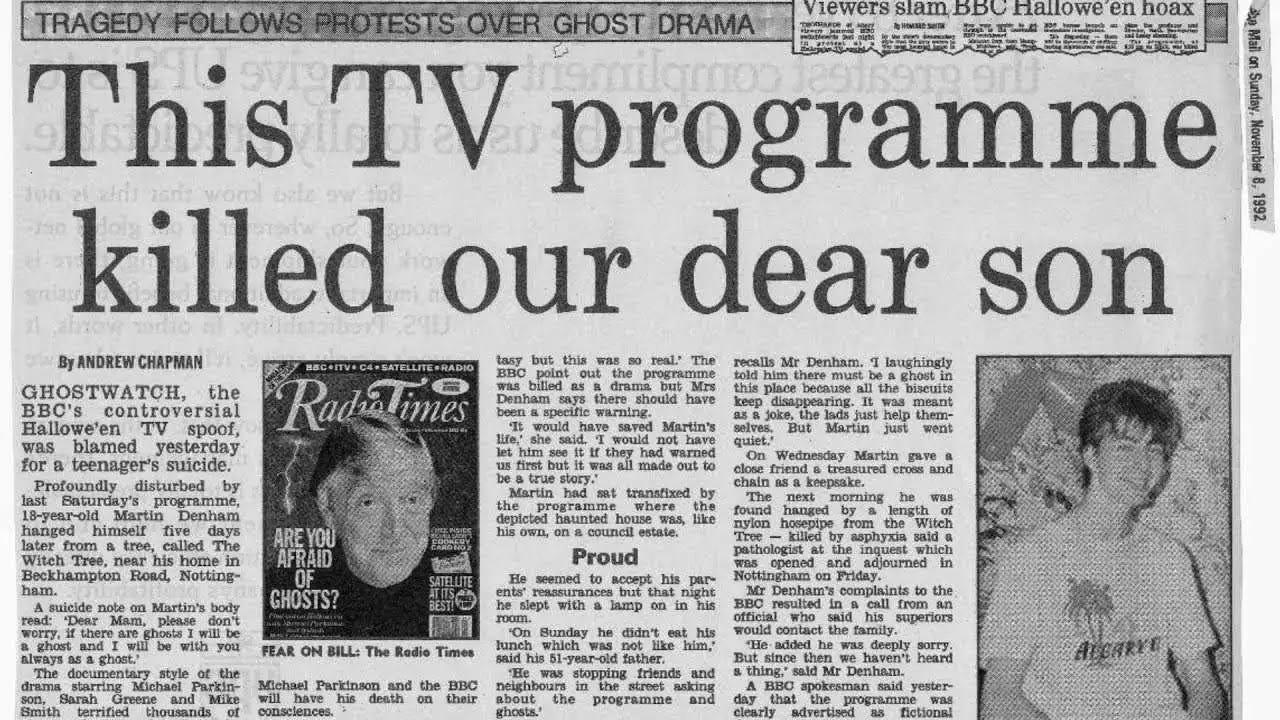
The Controversy
After Ghostwatch was aired, the reaction was uproar from different quarters, and the broadcaster faced some significant criticism for putting such a deliberately unsettling programme on national television - viewers complained, newspapers complained, and the general consensus seemed to be that perhaps the BBC had gone a little too far for a Saturday night.
As a result of the controversy, the programme effectively disappeared from UK television, where it wasn’t repeated and remained absent from official releases for many years, quietly drifting into the category of “things the BBC would rather not have to explain again.”
For a long time, Ghostwatch then survived mostly through word of mouth and the occasional VHS recording made by viewers who happened to tape the broadcast on that particular Halloween night.
Over time though, the reputation of the programme did begin to change, as what was once considered an ill-advised experiment started to look more like an unusually bold piece of television, where horror fans and critics revisited it, often noting how far ahead of its time it had been.
In hindsight, Ghostwatch stands as a quietly groundbreaking piece of television, where it managed to frighten a large portion of the British public, irritate the press, disappear for decades, and eventually return as a respected cult classic - an unusually productive evening’s work for a single broadcast.
It also remains one of the most memorable British horror experiences ever put on television, which is not bad for a programme that spent a good part of its life being politely ignored.
Final Verdict
Ghostwatch is one of those TV experiments that accidentally became legendary, where it took the most trusted format on British television and quietly turned it into a ghost story.
And for one Halloween night in 1992, a lot of people genuinely thought the BBC had broadcast a haunting live on air.
Which, when you think about it, is a pretty impressive trick.
More Reviews


I watched this for the first time last year and I think it still holds up pretty well. One of those things I wish I was around to see at the time, I hadn't realised how controversial it was.