

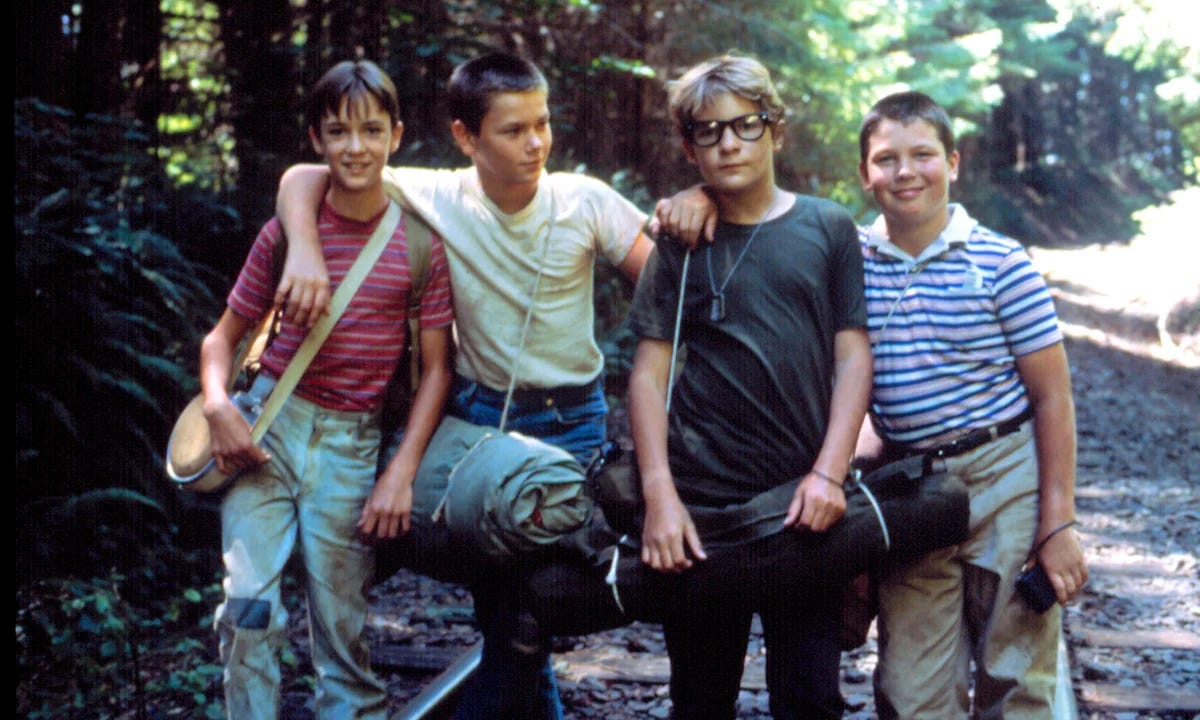
After posting yesterday in my notes about Stand By Me re-releasing at the end of March for its 40th anniversary to co-incide with a new audiobook being released, I knew what I had to re-watch last night.
And it reminded me again that a movie with pretty much no plot, explosions, twists or much else really, shouldn’t work as brilliantly as it does.
It does so much with so little that it almost feels accidental.
Good Points
Natural, believable performances from all four leads
Simple story
Emotional restraint
Atmosphere
Narration
Quiet powerful ending
Bad Points
A few jokes and insults feel dated
I’ve watched this at different stages of my life
I am not sure how many times I have watched Stand By Me - lots - but each time you realize that the film doesn’t change, only you do - when I was younger, it felt like an adventure, now it feels like a memory.
It involves a plot of four boys in 1959 that go looking for a dead body- that’s it - it has no elaborate mystery, no twist, and the body is almost irrelevant, as the real story is in the walking, the talking, and the silence in between.
The emotional core isn’t the destination, it’s the journey.
Oh to be a child again
While the movie certainly has a certain childhood warmth about it, but it also has a real danger and discomfort to it as well - the train sequence for example - and when they run, it’s frantic and messy, with total panic.
It tries to convey childhood, and will no doubt make you reminisce, but it certainly doesn’t attempt to make any of it look pretty.
The four boys don’t even feel like they have been written
We have Gordie with his quiet grief that never turns into a melodrama. Chris who balances toughness with vulnerability without begging for sympathy. Teddy and his bravado that hides something unstable and sad. And Vern, who is comic relief, but not cruelly treated.
They all just feel like kids figuring themselves out in real time, where their conversations drift from comic books to fears to random nonsense, and it sounds exactly like how boys that age talk - half-performing, half-confessing.
The movie also doesn’t rush anything, in a way that mirrors memory itself, as when you think back on moments like this, it’s never just the big event - it’s the walk, the heat, the boredom, and the inside jokes that make no sense to anyone else but them.
The older boys aren’t villains so much as warnings.
Ace and his crew aren’t deeply explored, which I have seen people critisize the movie for, but they don’t need to be, as they are merely representing a path - what happens if anger and resentment harden, and what you could become if you take the wrong choices along the way.
No Ace, just you.
The whole narration frames the story as something to be remembered, not relived, with no forced sentimentality, just an acknowledgment that some friendships fade., and life moves on.
That is what gives the ending its weight - it simply states a truth most people recognize.
And of course we have Director Rob Reiner overseeing it all, where he doesn’t oversell anything, the camera often hangs back, and the Oregon landscape looks warm and dusty without feeling romanticized.
He understood that not everything needs explanation.
Final Verdict
Stand by Me observes, it trusts, and it leaves space for silence and awkwardness and unfinished thoughts, and what ends up staying with you is the image of four boys walking side by side, unaware of how short that stretch of road really is - and every time I rewatch it, I’m reminded that the small stories are the ones that tend to stick the longest.
More Reviews


I like your observation that film doesn’t change, only you do. There are several films like this that deserve to be rewatched at different stages in your life. Nice review.
Been on my watchlist forever. After reading your write up, I'll definitely watch it this month.