

I have watched The Godfather many times, and everytime I do watch it I notice even more that it never feels like it’s trying to impress you, it just does.


Good Points
Controlled, confident direction
Strong performances
Atmosphere built through lighting, framing, and silence
Subtle use of music and sound design
Themes of loyalty and power handled without any heavy-handedness
Bad Points
Pacing can feel slow and distant in stretches
It doesn’t push
The Godfather is a movie that is incredibly comfortable with staying inside its own world, with little outside perspective, and no attempt to step back and comment on what’s happening - everything is filtered through the family, their rules, and their logic.
This really helps to make the movie even more engaging, even if it’s not exactly a comforting place to sit, but it also never pushes you into sympathizing, and it doesn’t try and manipulate you either - it just lays everything out and lets you sit with it.
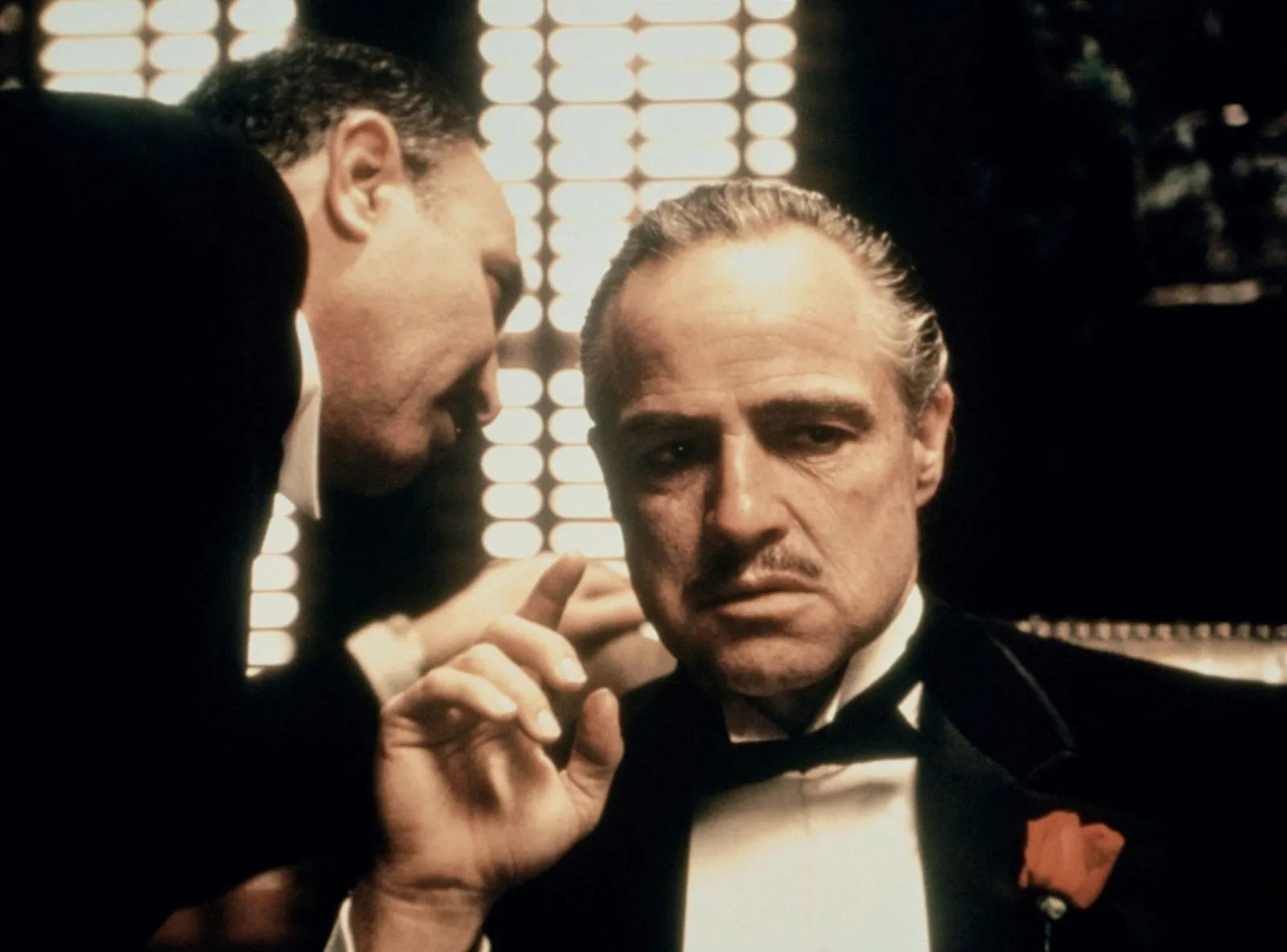
Marlon Brando does very little here, yet is masterful, and he brings a constant sense of authority in how he moves and speaks, where nothing feels wasted when he is on screen.
Al Pacino is even more interesting to me though, with his controlled, almost held back shift in character, with the small changes the ones you notice the most as he quietly adjusts to what is happening around him.
John Cazale stands out in a different way, as there’s an unease to him, a lack of confidence that contrasts with everyone else - and while I didn’t like the character, I understood him, and that makes certain scenes harder to watch, but I suppose, that’s the point.
Everything is controlled, even the visuals.
The camera rarely moves without a reason, and it feels like it’s just observing rather than guiding, a bit like you as the viewer, and there’s space for you to take things in without being told how to feel, while the lighting is dark, intentionally so - faces half-hidden, rooms closed off, details slightly obscured - which helps to create this sense that things are always being concealed, even when they’re right in front of you.
Details do the heavy lifting.
Upon every rewatch, I notice new small things - gestures, objects, the way scenes are staged - where nothing draws attention to itself, but it all adds up, and the film clearly trusts those details to carry meaning without underlining them, and I do like that approach.
Costumes and setting too are at play here and meaningful with how quietly it tracks shifts in power and identity - it’s subtle, but it’s there if you’re paying attention, but the film doesn’t rely on it - it just lets it exist as part of the structure.
You have to love that.
Sound that knows when to stay quiet.
The sound design is something that caught me off guard the first time I watched it, because there are moments where it becomes more intense than originally expected, almost overwhelming, and it did not feel too realistic either, but I have learned it doesn’t need to be either - it feels more internal than external, and the more I watch it, the more I realize it works, even if it was slightly jarring at first.
The music, on the other hand, stays out of the way for most of the film, and it never tries to take over the scene, which gives everything else even more room to breathe.
Slow, but deliberately so.
You do feel the length at times, least I do, as there are stretches where the pacing slows enough that you really became aware of it, but at the same time, that same pacing allows scenes to show even more without ever pointing it out to you.
There are long conversations, quiet transitions, and moments where nothing “dramatic” seems to happen on the surface, but that slowness is doing some very deliberate work, as it’s meaning through observation.
Take the early wedding sequence - it runs long, introduces many characters, and doesn’t rush to a clear narrative goal - but by the time it ends, you understand the world- how favors work, how respect is negotiated, how Vito Corleone operates without needing explicit explanation.
It’s all very purposeful, The Godfather in the end is all about loyalty, and how it handles it, as it doesn’t present it as purely good or purely damaging, it just shows you how it shapes decisions and consequences without offering a clear judgment.
It’s a great balance, with no neat takeaway, no moment where the film tells you what to think either - it just presents the reality of it and moves on.
Oranges, anyone?
Final Thoughts
The Godfather is controlled, restrained, and occasionally distant, but that distance also works - it’s a well loved film for a reason.
More Reviews


