

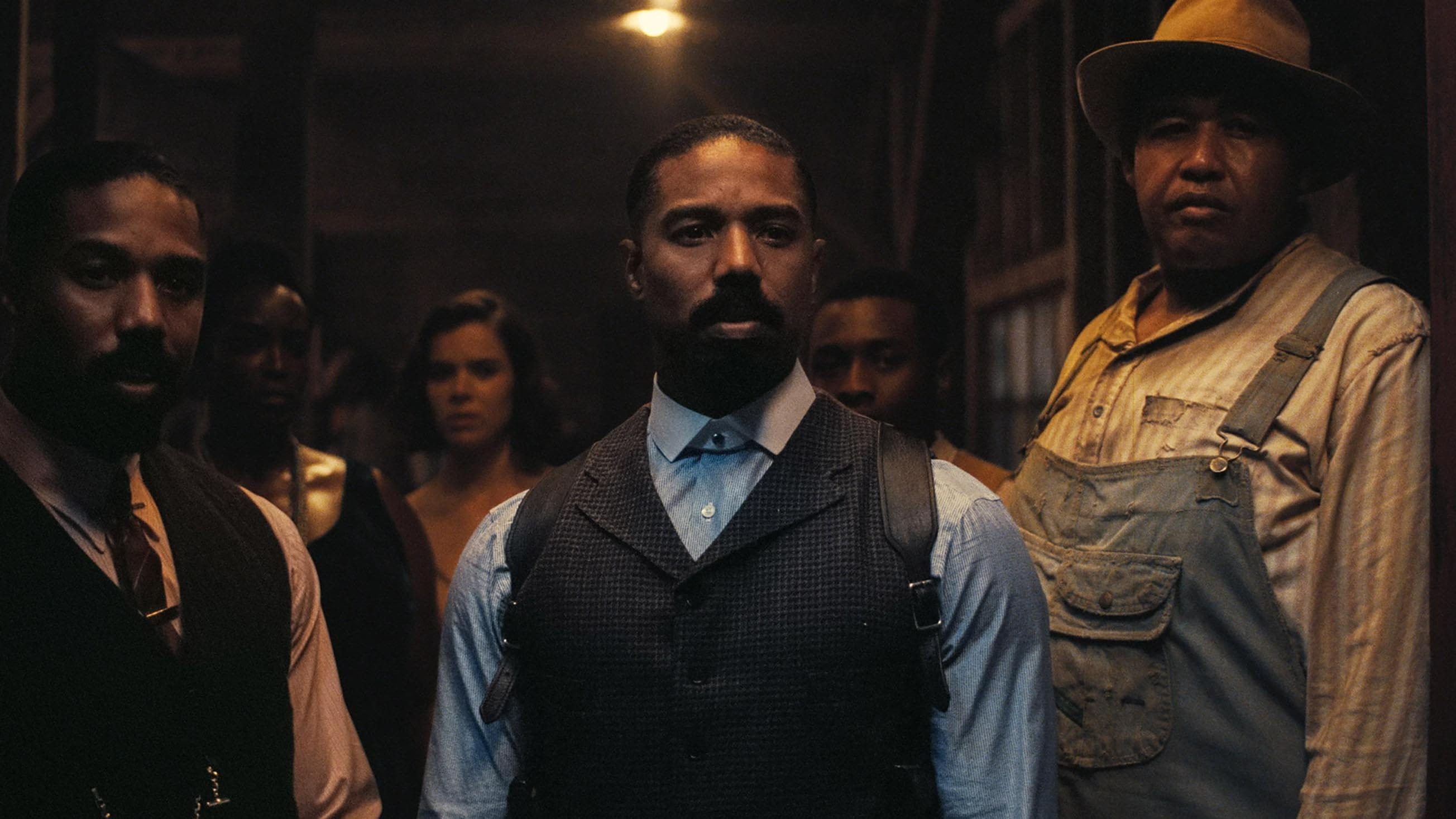
Some of the negativity around Sinners, from what I have read, is because it is ‘messy’, and mixes in a lot of different stuff at once.
Now normally, I would agree with that take for a film, but for Sinners, it’s one of the reasons why I do love it - it barges in, mixes genres, and just expects you to keep up.
I am sure you have read tons of posts about the movie, so I doubt I will bring much new to the table, but with the Oscars just round the corner, I thought I would give a few thoughts.
Good Points
Bold, confident genre mash-up
All the performances
The music
Horror elements that slide in naturally
Strong atmosphere and tension
Thoughtful undercurrents
Bad Points
A couple of tonal shifts do feel a little uneven, but nothing major.
Controlled Chaos
Sinners is such a confident movie, I mean, incredibly confident, and it’s clear that Coogler clearly doesn’t care about staying in a single lane, and that energy shows throughout when you are watching it - it knows it’s ambitious, and messy, and it leans into that with full commitment, with a kind of cinematic bravado that doesn’t apologize for its quirks or try to smooth them out.
It’s bold, but it never tries to hide that.
Performance Power
Michael B. Jordan is excellent, as everyone knows by now, where the dual roles feel different enough, with a distinct energy to both, although is it as good as Eddie Murphy’s dual roles in films? The jury is out….
But it’s not just Jordan that’s excellent, Sinners is full of great performances, as while Jordan anchors the story, the supporting cast adds so so much as well, in particular Delroy Lindo and Wunmi Mosaku, who have both been nomated for oscars as well, while the likes of Miles Caton, Jack O’Connel and Hailee Steinfeld all shine too.
Music That Breathes
But, my favorite thing about Sinners isn’t the performances, it’s the music, which is the lifeblood of the film, where you feel the music as much as you hear it.
The score, curated by Ludwig Göransson, blends Delta blues, gospel, and early soul, where it all feels oh so raw, sweaty, and alive, and where songs are performed, argued over, celebrated, and sometimes stolen, which just reinforces both the period setting and the story’s themes at play.
You actually notice the music more when it stops, too - it all feels heavier when it is not playing, and that contrast between sound and silence is what drives that tension as effectively as any vampire threat.
I also particularly appreciated how the music serves multiple purposes, as it isn’t simply for spectacle or nostalgia - the songs carry narrative weight, conveying unspoken emotions, shaping character relationships, and emphasizing the stakes of the brothers’ ambition - it’s all just a negotiation of respect, power, and cultural legacy.
Horror Without Shouting
The horror elements are very subtly used here, but are also very effectivly used, as there’s no heavy-handed theatrical jumps, so when the tension does escalate, it relies on behavior, glances, and environment rather than spectacle - that quiet, almost casual approach to terror is smarter than most genre hybrids, because it lets the supernatural feel like it’s always been there, just beneath the surface, which makes the horror feel inevitable rather than inserted.
It’s restraint done perfectly.
Subtext and Cultural Insight
Beneath everything happening lies the commentary on cultural ownership, where Blues music is celebrated, and admired, and Sinners lets moments and dialogue suggest inequities, leaving you, as the viewer, to absorb them fully.
The film adds so much depth but it does so without ever slowing anything down too much, as Sinners is a movie that thrives on risk-taking and ambition, so even when it threatens to tip over at times, it actually rarely does, and it succeeds because it trusts its own instincts.
And we, in return, end up trusting it too.
Final Verdict
Sinners doesn’t behave itself, and it’s all the better for it.
And that’s exactly why it works.
More Reviews


