

Broken Bird is a confident but uneven directorial debut that leans hard on mood rather than anything neatly structured.
Plot
A lonely mortician searches for love and belonging, but as grief and desire collide, her need for connection takes a disturbingly intimate turn.
What I Liked
A strong, consistent mood/atmosphere
Joanne Mitchell shows confidence in her directorial debut, even if it didn’t work for me
Rebecca Calder’s performance
What I didn’t like
The film lacks a clear, smooth narrative flow, which made the structure feel too disjointed
Pacing is inconsistent, and shifts noticeably from scene to scene
Supporting cast don’t always feel unified
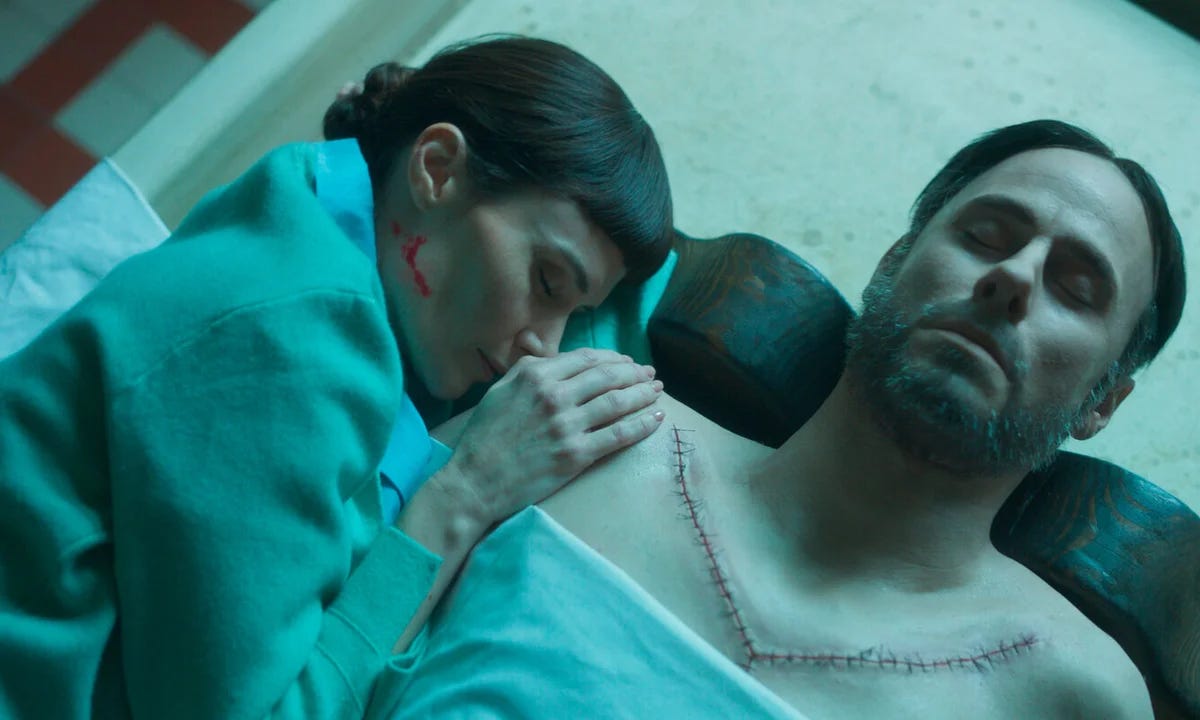
My Thoughts on Broken Bird
Joanne Mitchell’s approach to structure and control
Broken Bird is the feature directorial debut for Joanne Mitchell, and I always like watching films from a first time director to see the style they bring, and here, you have to say she doesn’t really direct or build in a straight line, which clearly shows in how scenes are put together as they feel more like separate units placed next to each other rather than steps in a clearly shaped progression.
Each scene tends to start without much setup, and once it finds its tone it just runs with that until it naturally stops, so there isn’t much effort made to smooth the gap between one moment and the next.
Because of that, the film does have a feeling of it’s moving in sections rather than flow, and you don’t really get a strong sense of one scene pushing into the next, more that the film shifts location or focus and carries on from there, which gives it an uneven shape, but it;s also not in a way that feels accidental, more like it’s simply comfortable working in pieces rather than in a continuous arc.
You also have pacing that changes depending on what each scene is doing, as sometimes the film slows right down, and in others, especially ones that are more direct or functional, things move faster, and information comes in more quickly.
What that all means is the film never really locks into one tempo, but it adjusts constantly depending on the scene itself.
I would say it’s confident and bold, but whether that style will be for you or not though is another matter.
A constant moody feel
There’s a consistent strong mood running through Broken Bird that thankfully doesn’t really shift, because even when the pacing or scene focus changes, it stays fairly muted, slightly tense in the background, and fairly observational without feeling too detached from everything, and that is what actually ends up linking a lot of the scenes together.
The scenes might be differing in structure, length, or energy, but they do at least still feel like they belong in the same emotional space because of the mood, so even when the film moves somewhere new, it leans on that shared mood to hold its shape, and just hopes that’s enough, and I would say for me, it didn’t really work.
Rebecca Calder carries the centre of it all
Rebecca Calder also ends up doing more of the holding together in Broken Bird than the film ever really signals on the surface, and while it’s not a performance that pushes itself forward or tries to define scenes, but it does gradually becomes clear that she’s the thing everything else keeps returning to.
She manages to stay in a fairly controlled emotional space throughout, not shifting much even when the film around her changes tone or energy, and in a different film that might feel limiting, but here it does end up giving her a kind of reliability the rest of the film doesn’t really have.
The supporting cast each also bring their own way of approaching scenes, and some of them play things very close in, while others are a bit more open, which don’t help some scenes land well in a unified tone, so that just ended up making them feel more like individual performances sharing space rather than shaping any sort of collective dynamic.
Unfortunately, that also just added to the uneven style I felt throughout while watching it.
Final Verdict
I found it quite a frustrating film to watch, as while it does have a good mood and atmosphere, it’s also quite a messy film that didn’t quite do it for me, but I admire the confidence at least.
Trailer
Film Credits
Directed by Joanne Mitchell
Sreenplay by Joanne Mitchell, Dominic Brunt and Tracey Sheals
Based on the 2018 short film, Sybil by Joanne Mitchell
Cast includes - Rebecca Calder, Jay Taylor, James Fleet and Sacharissa Claxton
Runtime - 99 minutes.
More Film Posts
Folk Horror Films to Watch
Folk horror has always felt like a label to me that doesn’t seem to sit still for very long, because it seems to change depending on who’s using it, a genre that seems to be defined almost completely by an emotional state and shape.
Enola Holmes 3 (2026) Review: Millie Bobby Brown Shines in a Familiar Sequel

Enola Holmes is a series that is starting to run low on fresh ideas.
The Invite (2026) Review: Awkward Comedy That’s Easy to Watch

The Invite keeps things simple - four people, one space, and a dinner that slowly turns into something far more uncomfortable than anyone planned.
Lucky Strike (2026): A Simple War Story With a Predictable Structure

Lucky Strike is a simple straightforward war film, which stays pretty flat from start to finish.
Leviticus (2026) Review: Religion, Control, and Uneasy Relationships

If you’re looking for a lot of traditional horror elements with Leviticus, you might be disappointed, but if you like films that lean heavily on mood and tension, it’s worth watching.