

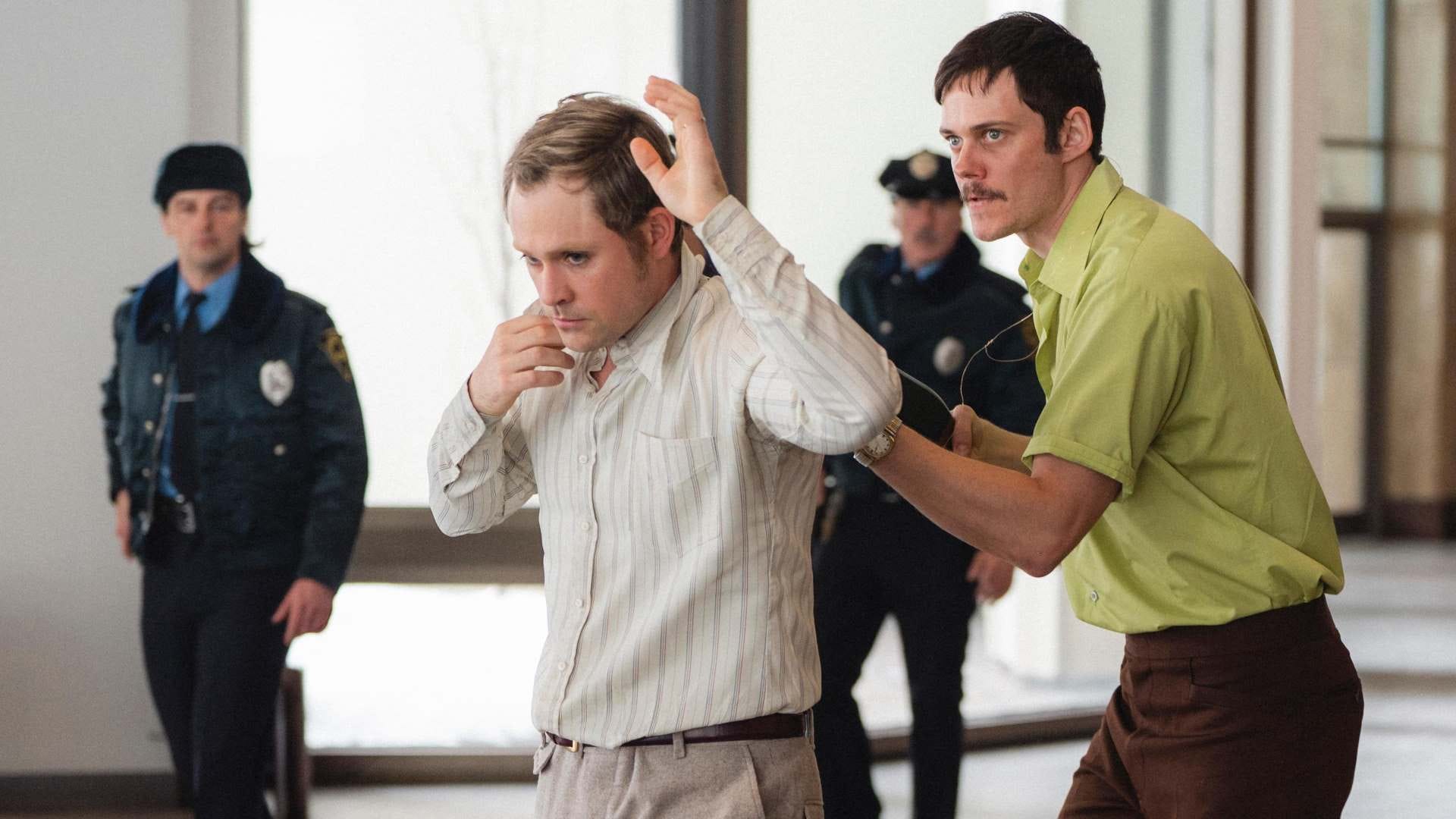
Dead Man’s Wire is a movie that doesn’t really want approval.
Good Points
Bill Skarsgård’s unglamorous performance
Dry, uncomfortable humor
Strong tonal control between absurdity and menace
1970s production design
Supporting cast
Bad Points
Pacing softens in the final stretch
Skips over the legal and emotional aftermath too cleanly
Some scenes went on a bit too long
The film feels slightly off to the side of things
This is an odd movie, and it never tries to sand that down to be fair to it, as the humor is dry, and deliberately mistimed, often arriving when tension is already high, and I couldn’t help but laugh a few times while also feeling a bit uncomfortable about it - but some might argue those are the best laughs.
Bill Skarsgård is really good as Tony Kiritsis, where he looks ordinary to the point of dullness - there’s no cinematic polish here - but it’s his physicality that shines in the way he shifts, and the sense that he’s always slightly out of sync with the room.
Tony isn’t a symbol or a mastermind
The film never seems to ask you to excuse Tony, as he’s allowed to exist as both fragile and dangerous, unraveling in public while still being treated as a threat, and watching that contradiction play out is uncomfortable, and the film wisely refuses to resolve it neatly, while next to Skarsgård’s jittery unpredictability, we have Dacre Montgomery’s Richard Hall, in an incredibly restrained role, where he spends most of the film reacting and absorbing rather than driving it.
He holds the fear just below the surface, and without that contrast, the film would probably tip too far into chaos.
Richard is never as interesting as Tony though - control is always slipping away from the people who supposedly have it, and the narrative doesn’t pretend otherwise - and while I think some viewers may want more depth here, I thought it worked fine.
Al Pacino also arrives in sharp suits and unapologetic bluster, and subtlety certainly isn’t the point here, and the film is smart enough not to pretend otherwise.
All the laughs come from situations and behavior, with people doing the wrong thing at the wrong time, repeatedly, and the comedy emerges naturally from that collapse.
What’s missing becomes noticeable once the chaos starts to resolve.
The film skips over the legal and emotional aftermath, which was disappointing, and yes I understand the intent - to stay focused on disorder rather than consequence - but the absence certainly registers.
Similarly, the pacing softens late in the film, lingering on moments that slightly dull the momentum, although nothing breaks the experience, but the tightening hand loosens more than it should.
Final Verdict
Dead Man’s Wire is stubbornly committed to its strange tone, where it doesn’t apologize, doesn’t moralize, and doesn’t chase likability.
The flaws are real, but so is the confidence behind them.
More Reviews


