

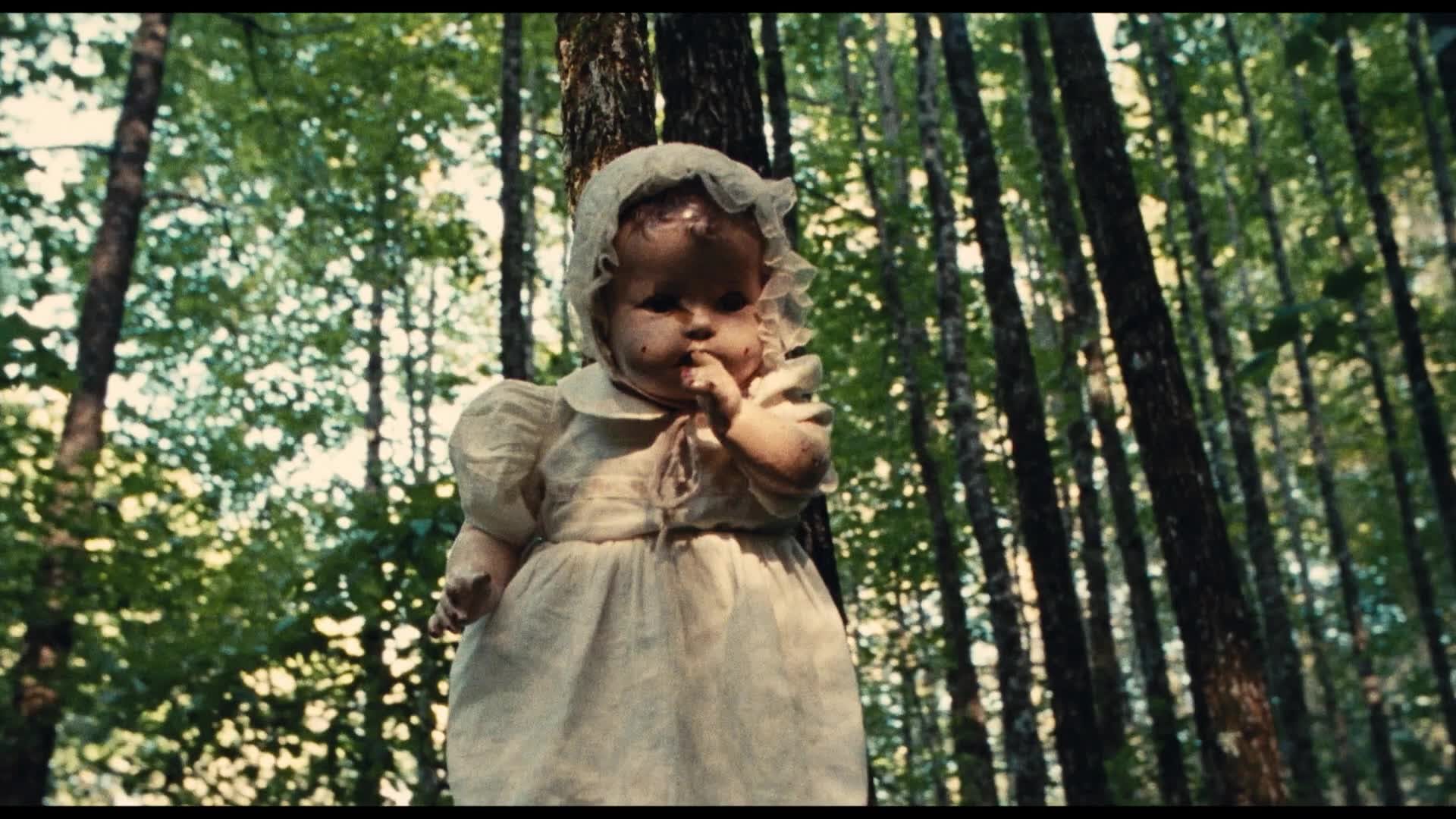
Dolly makes it clear quite quickly that subtlety is not on the agenda here.
Synopsis
A woman abducted in the woods by a masked, monstrous figure who aims to raise her as their child.
Good Points
A nasty, uncomfortable tone that commits fully to the premise
Fabianne Therese
Max Lindsey
Grainy 16mm cinematography
Bad Points
Some digital effects look noticeably fake
A few scenes drag
Horror influences are sometimes a little too obvious
Certain moments drift into accidental silliness
Subtlety isn’t the point.
The first thing you will notice when watching Dolly is how little interest it has in restraint, as while a some horror films slowly build atmosphere before revealing what kind of nightmare you’re dealing with, this one skips that stage, as it jumps straight into discomfort and keeps pressing the idea further the longer it runs.
That kind of approach can easily become irritating if the film doesn’t know what it’s doing, but here, the ugliness feels intentional - it’s not trying to polish the experience or make the violence look stylish -it’s clearly leaning into something rough and unpleasant.
The simplicity actually helps.
What surprised me is how much the film benefits from keeping things simple, as horror movies in this subgenre sometimes collapse under the weight of unnecessary explanations, where they start piling on mythology, twists, or elaborate backstories until the tension just disappears.
Dolly mostly avoids that trap, as it sticks to the core situation and lets the tension come from how the characters react, with a kind of blunt focus where the horror doesn’t come from complicated plotting - it comes from the psychological pressure the characters are forced to endure - and the longer the situation continues, the stranger and more humiliating it becomes, and watching that gradual erosion of control is where most of the tension lives.
Fabianne Therese
Her character, Macy, ends up carrying most of the movie, as nearly everything is filtered through her reactions, and that’s not an easy position for an actor to hold, and the situation she’s trapped in is disturbing but it’s also occasionally absurd.
The villain’s behavior has this warped, childish quality that could easily turn the whole film into a joke, but Therese manages the balance everything well, because she plays the situation straight without letting it drift.
And even when the movie itself starts flirting with bizarre territory, she keeps things anchored emotionally, so without that performance, I suspect the film would have falled apart pretty quickly.
The real surprise for me, though, was Max Lindsey as Dolly.
Masked villains in low-budget horror often feel like someone wearing a Halloween costume and walking around slowly for ninety minutes (Hello In A Violent Nature), but Lindsey avoids that trap by giving the character a strange physical presence and an unsettling rhythm.
Dolly has a tension that is between absurd and cruel, and that runs through the entire film.
The violence
When it comes to gore, the movie does not hold back, as the violence arrives early and doesn’t leave for the rest of the runtime, which was great for me as I tend to prefer horror films that commit to their brutality rather than teasing it, and Dolly clearly falls into the “show it” camp.
Sometimes that works very well - the rawness of the violence matches the film’s overall tone, but there’s also a downside.
A few moments do rely on digital effects that look noticeably fake, so when that happens, the illusion breaks immediately, and you are left thinking about how artificial the moment looked, and it pulls you out of the experience for a second.
The psychological angle
The most uncomfortable element isn’t the gore though - it’s the dynamic between Dolly and Macy.
The villain isn’t satisfied with simply hurting people - he’s trying to break them down psychologically - and there’s an unsettling attempt to reduce Macy to something helpless and childlike, stripping away her autonomy piece by piece.
Watching that process unfold is disturbing in a different way than typical horror violence, as it’s not just about physical danger - it’s about identity and control - and those scenes don’t always make for pleasant viewing, but they do give the film a nasty psychological edge.
If I have a consistent complaint though, it’s that the movie sometimes becomes a little too aware of its horror lineage, as references to older films appear throughout, and occasionally they’re a bit too obvious - it’s not that those influences are bad, they’re just very visible, and at times the film feels like it’s reminding you what kind of horror tradition it belongs to instead of letting the story speak for itself.
Final Thoughts
Dolly won’t be winning any awards, and it certainly has flaws, but I have to say I had fun with it, and I appreciated the film’s willingness to embrace its rough edges.
More Reviews


